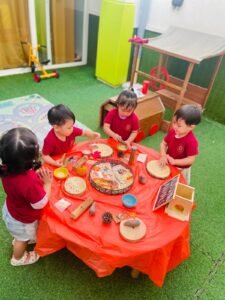
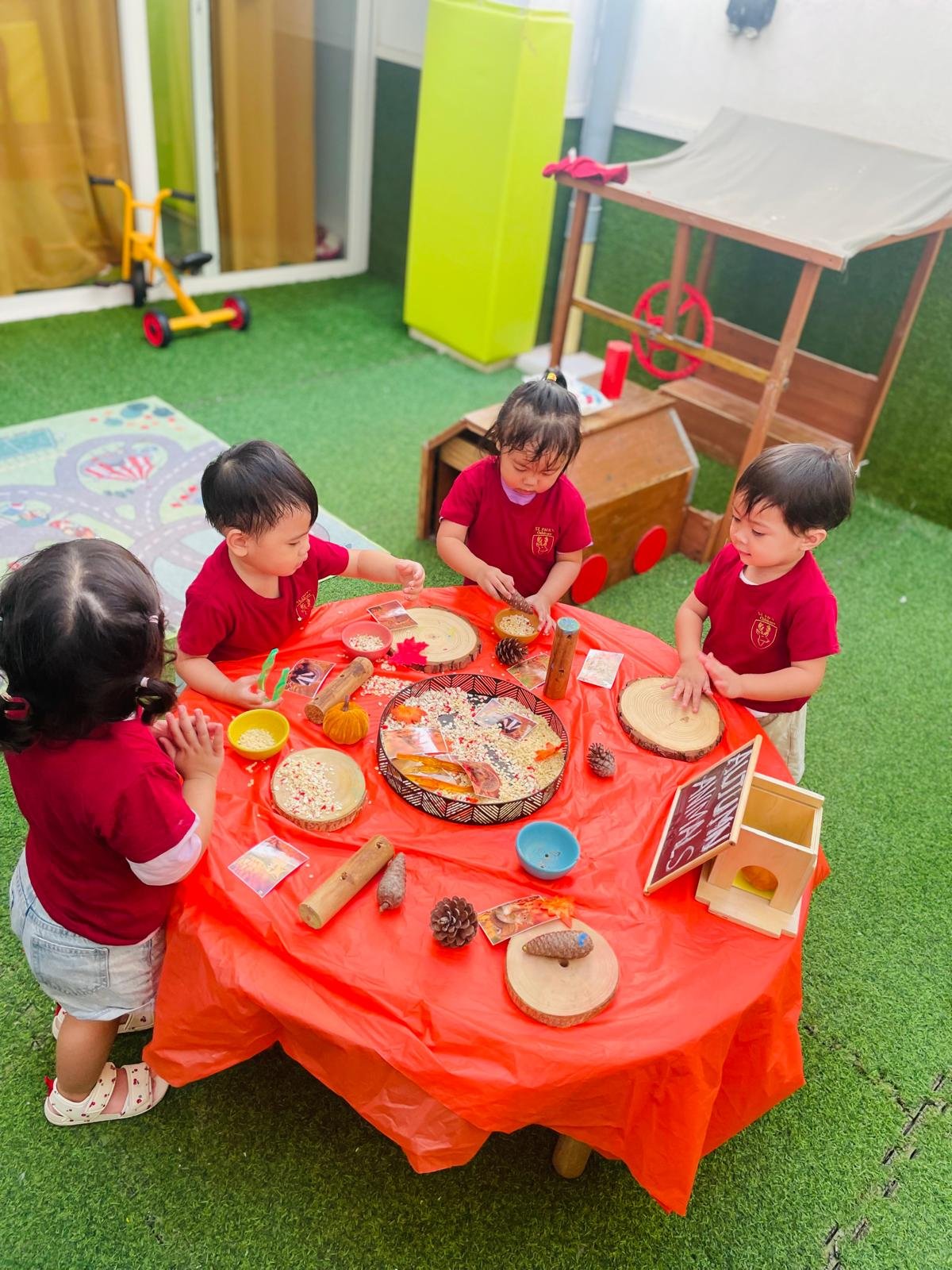
A little spilled rice, paint-covered fingers and a very busy child. It may look like a mess, but there is so much learning happening.
For young children, play is a way of exploring the world, testing ideas and discovering what they can do. Even the simplest activity can offer opportunities to practise important skills.
Little Hands, Important Skills
When children scoop, pour, squeeze dough or hold a paintbrush, they practise coordinating their hands and eyes and controlling their movements.
Filling a cup and emptying it again might seem repetitive to an adult. For a child, it is a chance to experiment: “What happens if I pour slowly? What happens when the cup is full?”
New Experiences Give Them Something to Talk About
Play creates opportunities for conversation.
Words such as “soft”, “rough”, “full”, “empty”, “sticky” and “smooth” become easier to understand when children can connect them with an experience.
An adult can gently introduce these words: “That dough feels soft. What happens when we squeeze it?” There is no need to turn the activity into a test. Simply noticing and talking together is valuable.
Playing Together Takes Practice
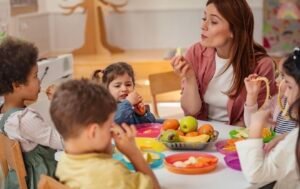
Sharing materials, waiting for a favourite tool and asking another child for a turn are things young children are still learning.
They will not always manage these moments easily. With patient support, play gives them opportunities to practise communicating their needs and considering someone else’s.
Trying Again Builds Confidence
Sometimes the tower falls. Sometimes the water spills. Sometimes the dough does not look the way a child imagined.
These small challenges offer opportunities to try another approach, ask for help and keep going.
Instead of fixing everything immediately, we can encourage them: “That didn’t work the way you wanted. What could we try next?”
Every Child Explores Differently
Some children jump straight into a new activity. Others prefer to watch, use a tool or touch a small amount first.
Exploration should feel inviting. Giving children time and choices allows them to participate at their own pace, without pressure to get messy.
Look Beyond the Finished Product
At St. Paul’s Childcare, we value the exploring, thinking and trying that happen during play.
A painting does not need to look like anything in particular to represent a meaningful experience. The child may have discovered a new colour, practised holding a brush or proudly made a choice of their own.
So when your child comes home, try asking: “What did you enjoy exploring today?”
You may discover that behind those messy hands was a day full of little discoveries. 💛