“No!”
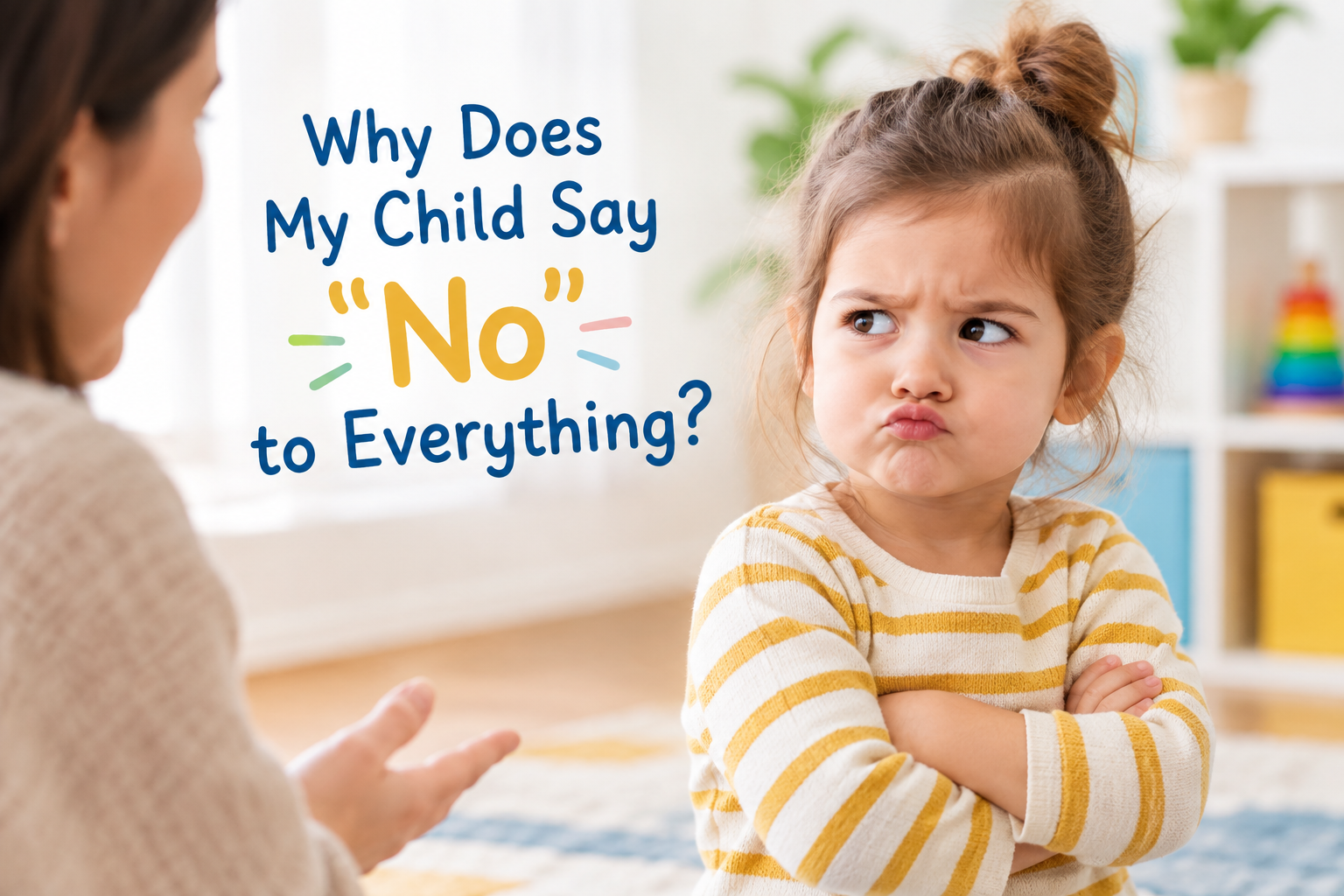
If your child seems to say it all day long, you’re certainly not alone. From refusing to get dressed to protesting bedtime, young children often go through a stage where “no” becomes their favourite word. While it can be frustrating, this behaviour is actually an important part of growing up.
“No” Is About Independence
As children grow, they begin to discover that they have their own thoughts, preferences and choices. Saying “no” is one of the simplest ways they can express: “I want to decide for myself.” Rather than seeing every refusal as defiance, try to see it as your child learning independence.Where possible, offer simple choices: “Would you like the blue shirt or the red one?” Your child gets to make a decision, while you still guide the situation.
Sometimes “No” Means Something Else
Children don’t always have the words to explain what they’re feeling.
“No!” might actually mean:
“I’m tired.”
“I don’t want to stop playing.”
“I don’t understand.”
“I want to do it myself.”
“I’m feeling overwhelmed.”
Looking at what is happening around the behaviour can help you understand what your child really needs.
Don’t Turn Every “No” Into a Battle
Not every refusal needs a power struggle. For things that aren’t optional, stay calm and clear: “I know you don’t want to leave. You’re having fun, but it’s time to go home.” For things where you can offer flexibility, give your child a choice. This teaches an important lesson: feelings are okay, but boundaries still matter.
Help Them Find the Words
As your child develops, help them replace “no” with more specific ways of communicating.
Instead of simply saying “no”, they can learn to say:
“I don’t like that.”
“I’m not finished.”
“Can I do it myself?”
These small steps help children develop communication, confidence and emotional regulation.
Behind Every “No” Is a Child Learning
The next time your child says “no” for the tenth time that morning, take a breath. They’re not simply being difficult. They’re learning how to express themselves, make choices and become more independent. At St. Paul’s Childcare, we believe these everyday moments are valuable opportunities for children to develop confidence, communication and emotional skills in a supportive environment. Because sometimes, behind every “No!” is simply a child saying: “Let me try. Let me choose. Let me show you what I can do.”